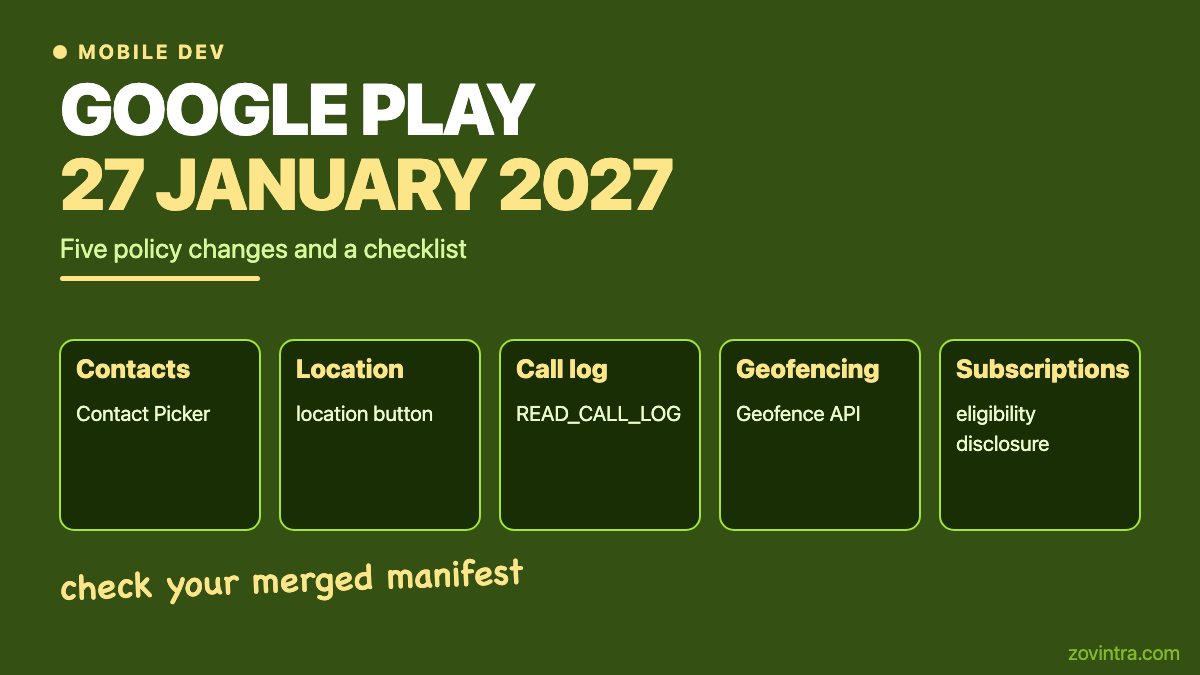
Google Play lists five policy changes that take effect on 27 January 2027, from a contacts picker to geofencing and subscription discounts. The five are a contacts picker, a location button, a call log permission limit, a geofencing change and subscription discount disclosure. If your Flutter app uses none of those features, you have little to do. If it does, the deadline is 27 January 2027.
What does Google Play's table say for 27 January 2027?
The table is Google's Play policy deadlines page. Five rows carry the date 27 January 2027. We summarise them in our own words, so read Google's full policy text before you act on any of them.
- Contacts: apps without a need for broad contacts access must use the Android Contact Picker. The policy page names no target API level for this one.
- Location: the table calls the location button the recommended minimum scope for precise location. The policy page is firmer: apps targeting Android 17 (API 37) or higher must use the Android location button for one-time or infrequent location requests, and using ACCESS_FINE_LOCATION requires a Play Console declaration.
- Call log: phone-call account verification is no longer allowed as a use case for READ_CALL_LOG. The table names the Digital Credentials API and the SMS Retriever API as alternatives, and the policy page also lists the Incoming Call Retriever API for phone-number verification.
- Geofencing: geofencing is removed as an approved foreground service use case. The table says developers should use the Geofence API.
- Subscriptions: subscriptions with ongoing eligibility-based discounts, such as student plans, must disclose the eligibility criteria, how eligibility is verified, and any price change after eligibility ends.
The rows sit under four policy names in the table: Permissions and APIs that Access Sensitive Information, Use of SMS or call log permission groups, Understanding foreground service and full-screen intent requirements, and Subscriptions.
Google's table does not say whether a deadline covers new apps, existing apps or app updates, and the policy pages do not either. They give a target API level for only three items: location (API 37 or higher), Local Network (API 37 or higher) and Manage Contacts (API 38 or higher). For contacts, call log, geofencing and subscriptions the pages we read state no app version limit, so assume every app that uses the feature is covered.
What changes later in 2027?
Three more rows sit further down the table.
- 14 April 2027: AppFunctions must comply with all Play policies and may not deceive or manipulate AI agents, bypass security controls, or interfere with other apps.
- 25 August 2027: the Local Network Permission is restricted. Apps targeting Android 17 (API 37) or higher must submit a Play Console declaration to use it.
- 25 August 2027: the Manage Contacts Permission is restricted to apps that need it for core functionality when system pickers are not enough. Those apps must submit a declaration, and the policy page says this applies to apps targeting Android 18 (API 38) or higher. Other apps must use narrowly scoped platform intents.
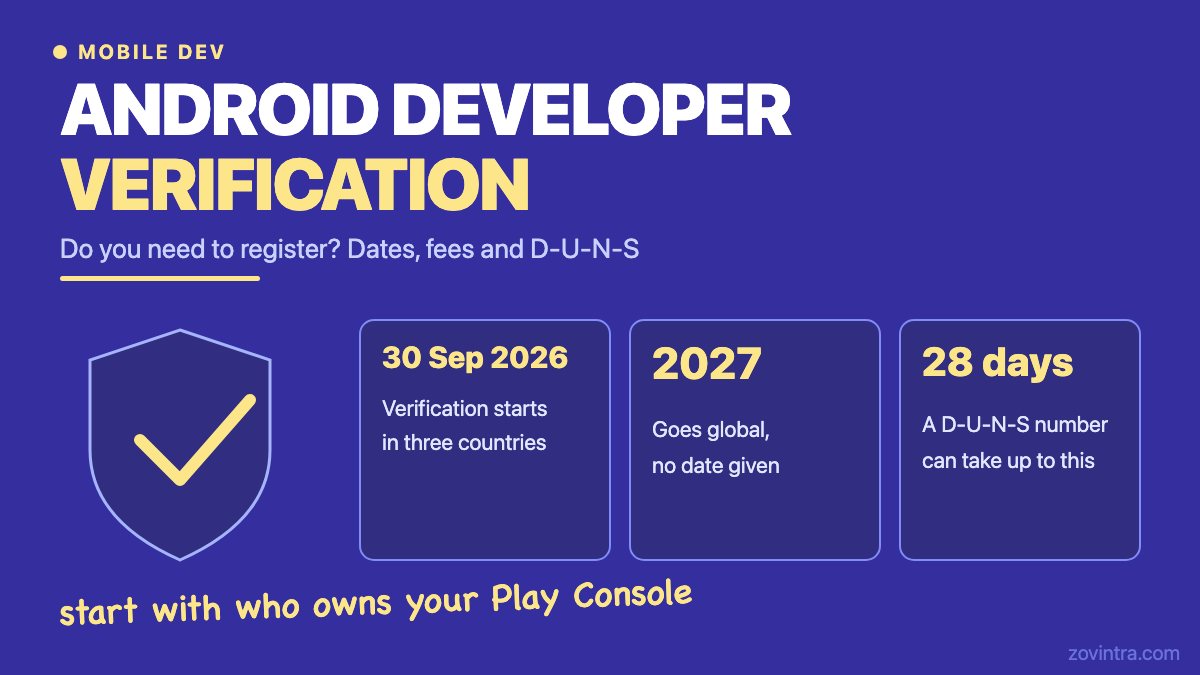
One earlier row has already passed. On 30 September 2026 the table said apps must be registered in Play Console to meet Android developer verification requirements, or risk removal from Google Play. If you have not confirmed that registration, do that first. Developer verification has its own post: do you need to register?.
Which Flutter plugins are affected?
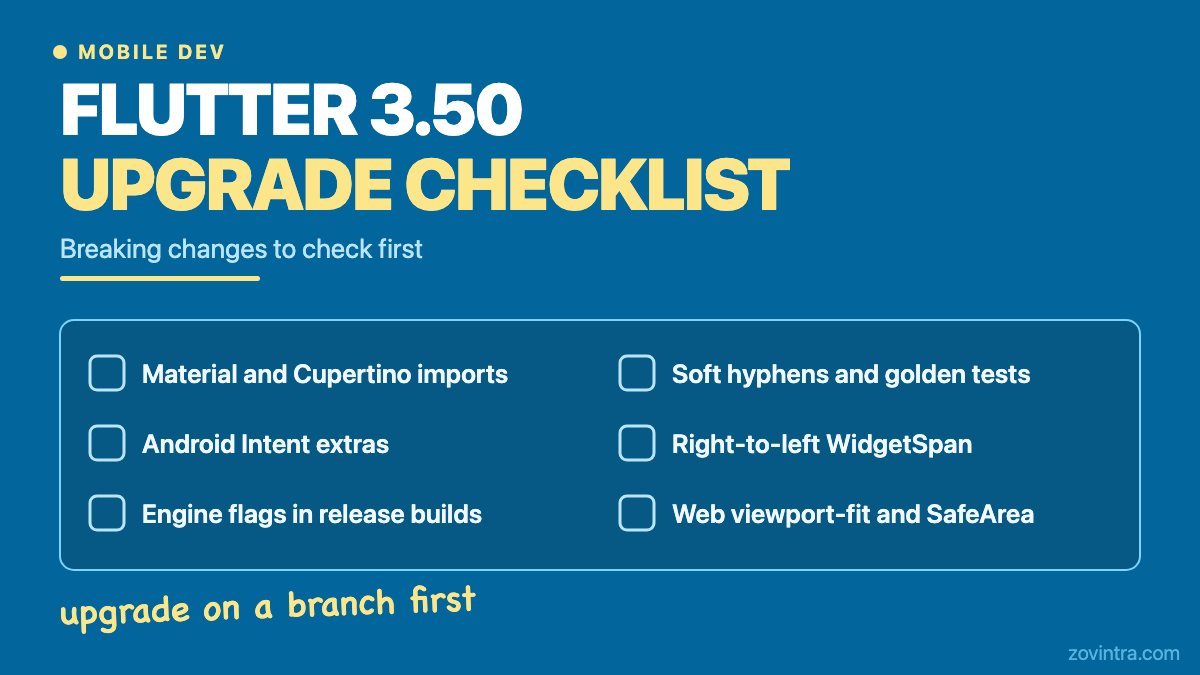
We do not know. The table names Android permissions and APIs, not Flutter plugins, and we did not test or read the source of any plugin for this post. So we name none. Your app is affected if its own Android code, or a plugin it depends on, requests these permissions or runs these services. If you are also moving to Flutter 3.50, read the upgrade checklist first.
You can check this yourself. The steps below are general engineering advice, not something from Google's table.
- Run flutter pub deps to list every package your app pulls in.
- Build a release bundle with flutter build appbundle. In Android Studio, open the merged manifest and search for READ_CALL_LOG, READ_CONTACTS, location permissions and foreground service entries.
- Note which package each entry comes from. The merged manifest view shows where an entry was merged from.
- For each hit, ask whether the feature is still used. Removing an unused plugin is the cheapest fix.
What to do this week
A dated checklist
Only the Google dates are fixed. The internal dates are our suggestion for a small team.
- Week 1 (suggested): permission and plugin inventory finished.
- Week 4 (suggested): a decision made for each affected feature, and the changes scheduled.
- Two weeks before 27 January 2027 (suggested): changes released to a test track and checked on a real Android device.
- 27 January 2027 (Google): the five rows above apply.
- 14 April 2027 (Google): the AppFunctions row.
- 25 August 2027 (Google): the Local Network Permission and Manage Contacts declarations.
Open Google's table again before each release. This post reflects the table as we read it on 15 November 2026.
When you can skip this
Skip the 27 January rows if your app does not use contacts, precise location, the call log, geofencing as a foreground service, or eligibility-based subscription discounts. Skip the whole post if you do not publish on Google Play. Even then, read the three later 2027 rows once, in case a feature you plan to add falls under them.
Need a second opinion?
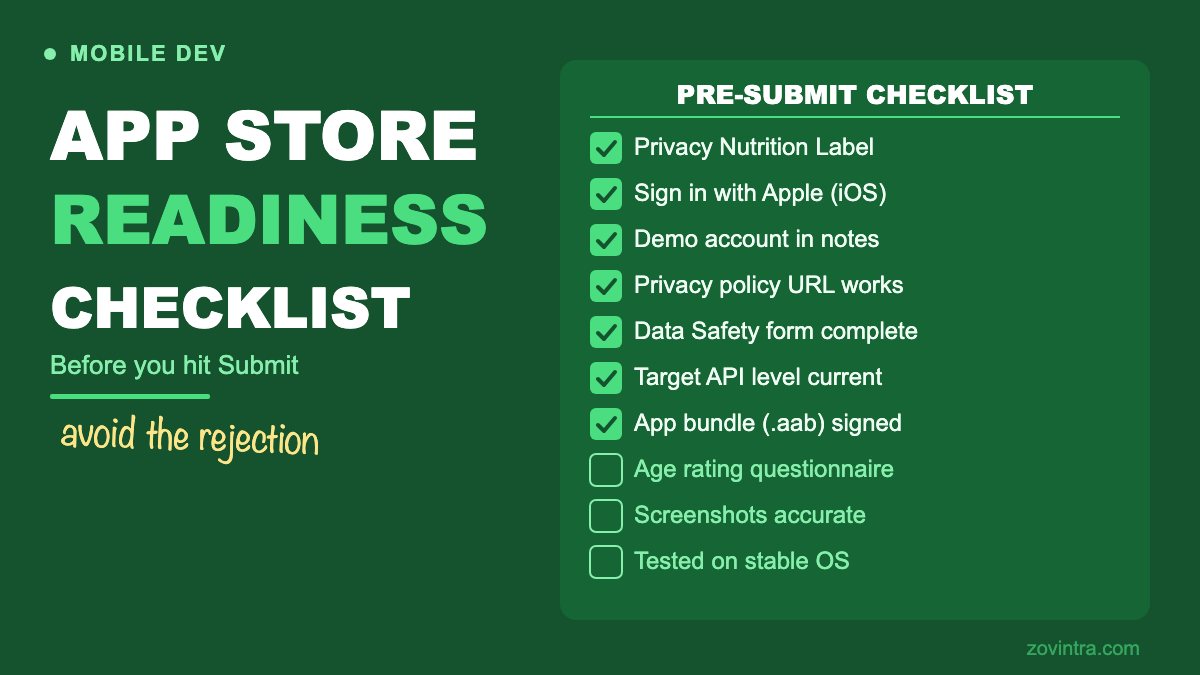
If you inherited a Flutter or Android app, the free code review reads the repository read-only for risky app settings and dependencies. It is not a Play policy check, so use the merged-manifest steps above for permissions. For store submission basics, see our app store and Play Store readiness checklist and the post on why AI-built mobile apps get rejected.
Common questions
Do the 27 January 2027 changes affect every Flutter app?
No. They apply to apps that use contacts, precise location, the call log permission, geofencing as a foreground service, or eligibility-based subscription discounts, as the table describes them. Check your merged manifest to see which you use.
What replaces geofencing as a foreground service?
The table says developers should use the Geofence API.
What replaces call log phone verification?
The table names the Digital Credentials API and the SMS Retriever API as alternatives to READ_CALL_LOG for phone-call account verification.
Sources
- Play policy deadlines table
- Permissions and APIs that Access Sensitive Information
- Use of SMS or call log permission groups
- Foreground service and full-screen intent requirements
- Subscriptions (preview)
- Subscriptions (updated article)
- Play Console Requirements
Building something similar?
Talk to our engineering team about your architecture, roadmap, and delivery timeline.
Request a Technical Review →
We design, engineer, and deploy high-performance web platforms, mobile applications, and intelligent cloud systems.