CatalogCraft
A Seller Console for Catalog Quality, Pricing and Returns
A concept study: we worked up this product, its architecture and its screens as an example of how we would approach it. The screens use fictional demo data and are design concepts, not screenshots of a live product, and this is not a client project.
About the Project
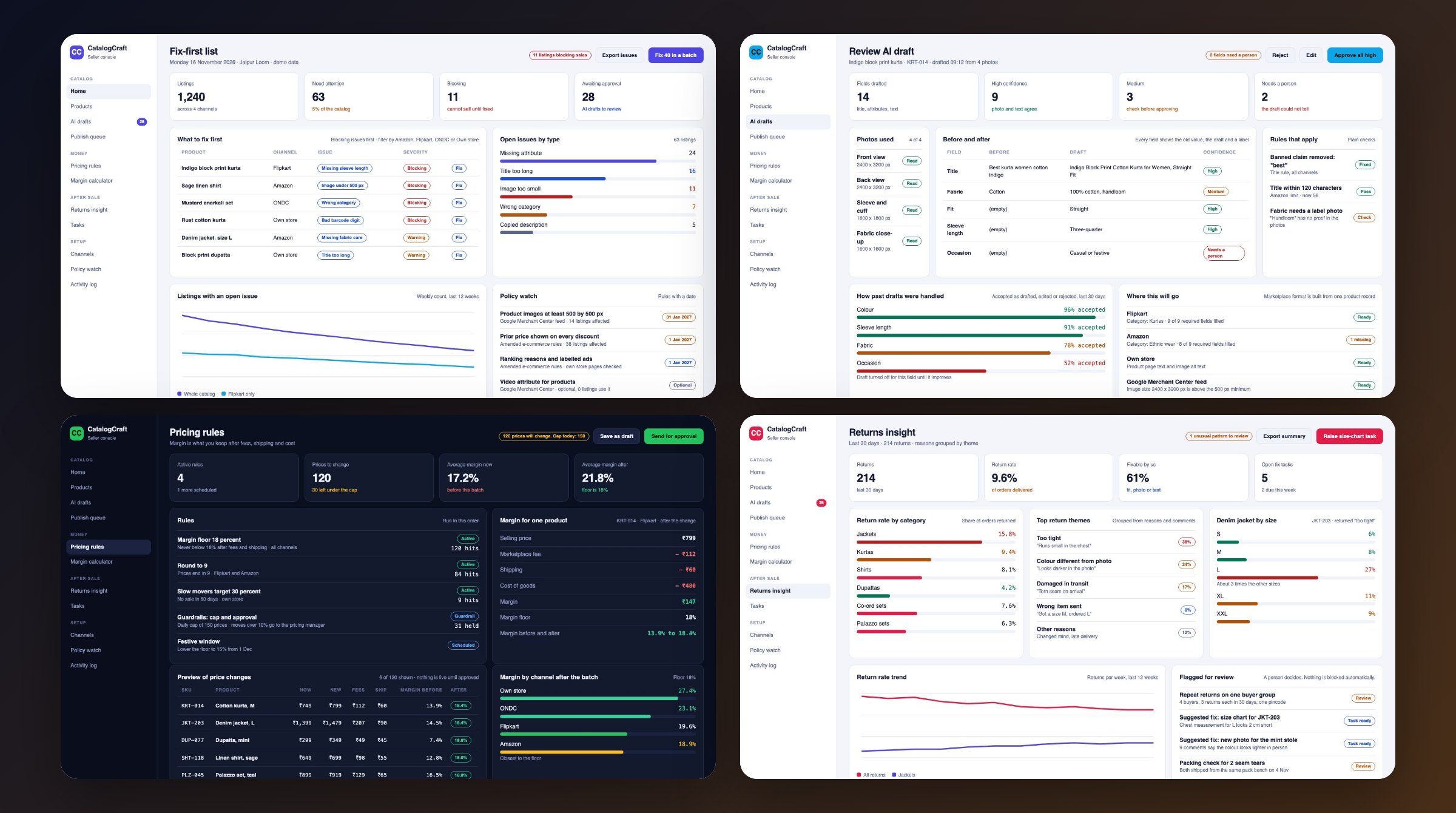
CatalogCraft is a design concept for a web console used by a seller who lists the same products on three or four marketplaces. One master product record holds variants, photos and attributes. The console maps that record to each marketplace's own categories and field names, so the seller edits a product once and checks it everywhere.
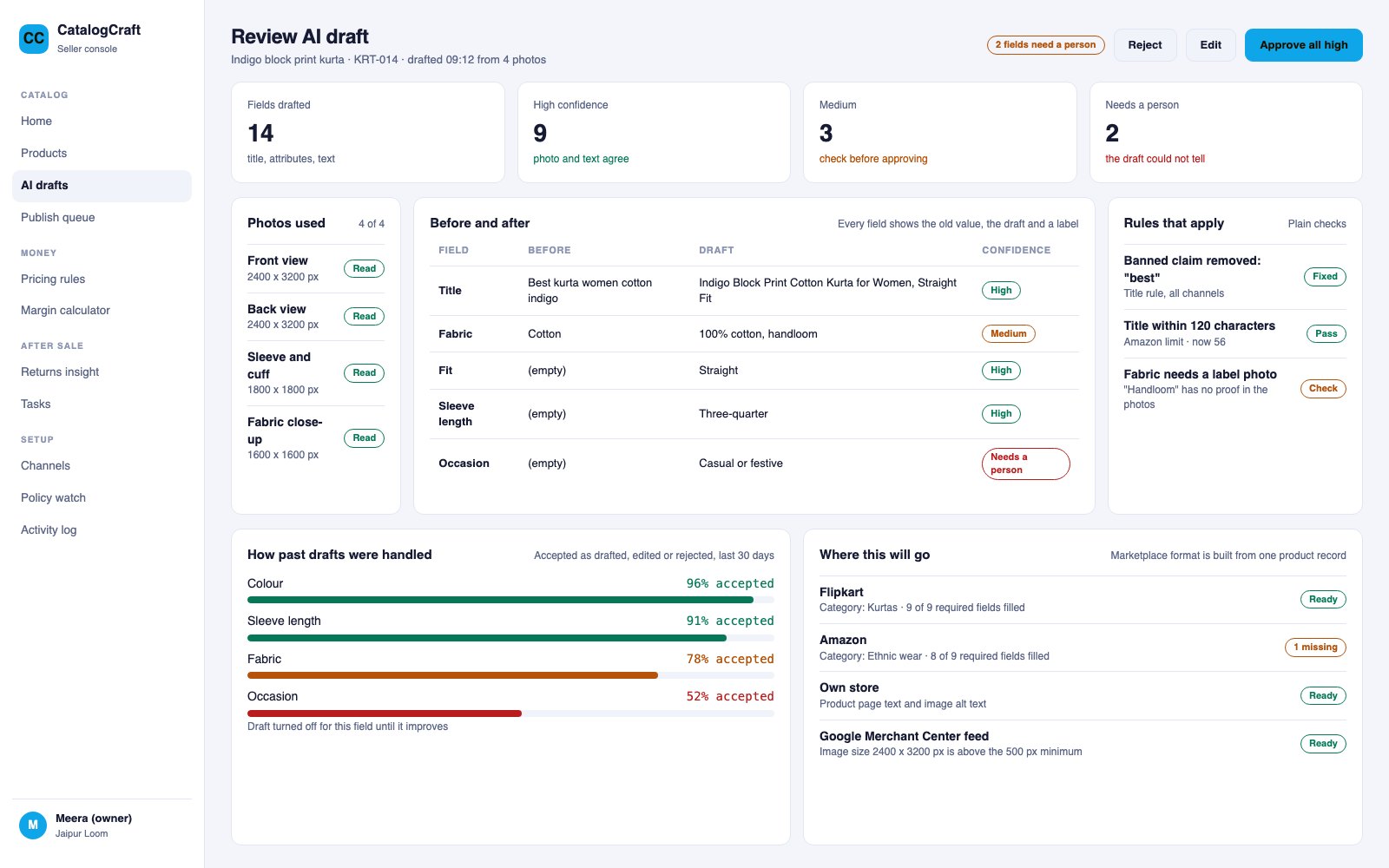
Each listing is tested against written rules for its marketplace and category, such as missing attributes, title length, image size and a wrong barcode digit. The result is a fix-first list that puts blocking problems at the top. An AI model drafts titles and attributes from the photos and text, but every draft appears beside the old value with a confidence label, and a person approves it before anything is sent.
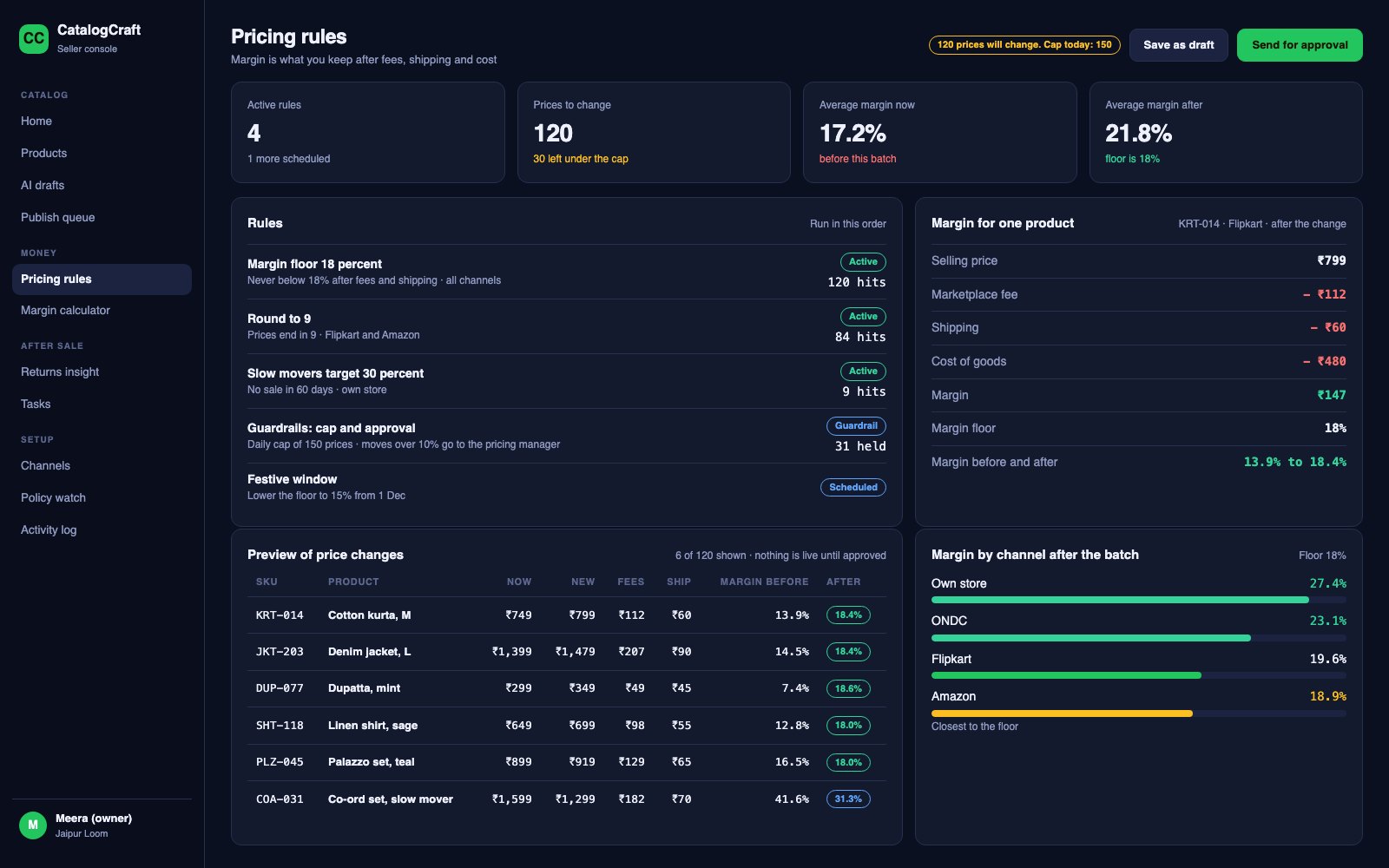
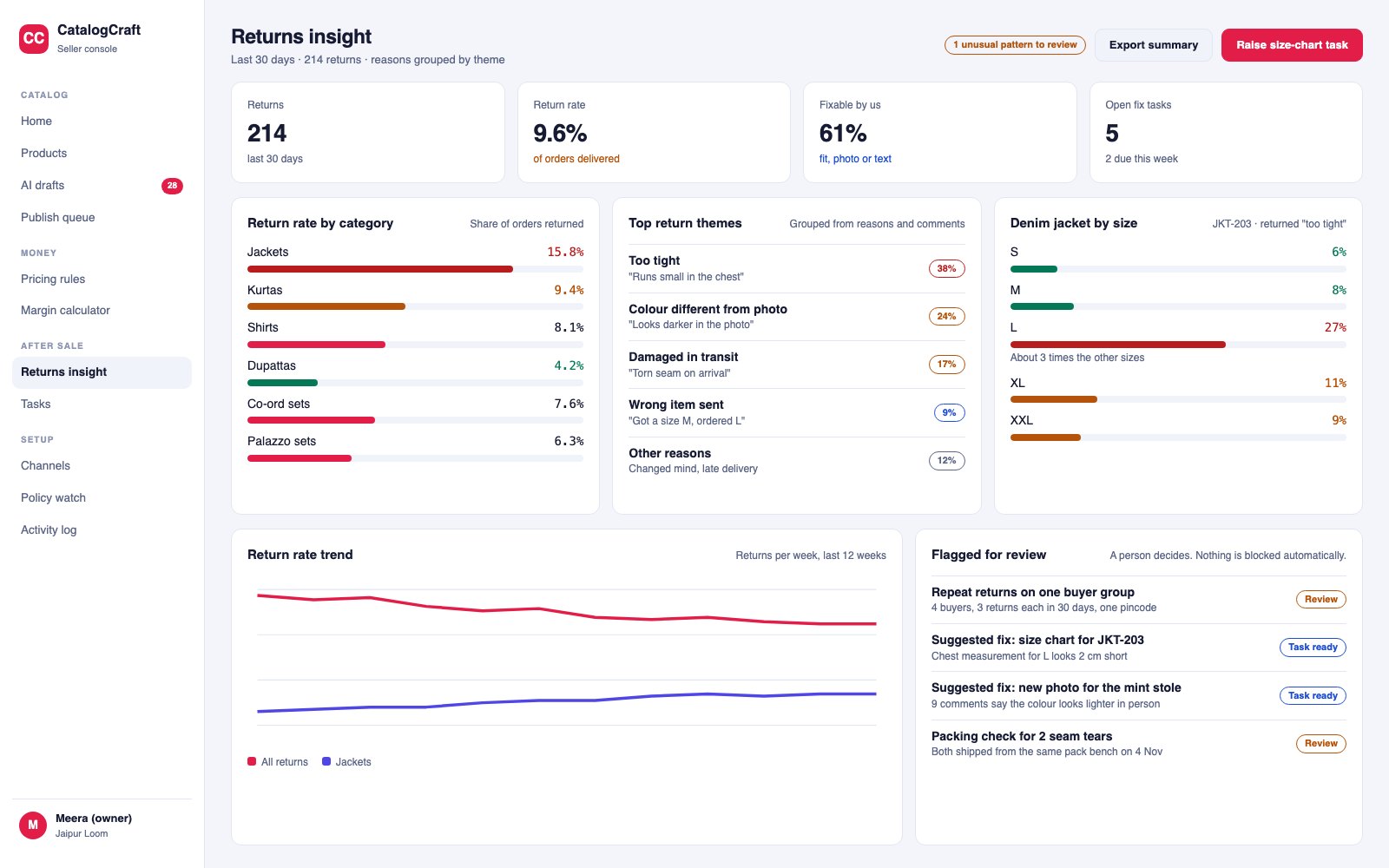
Pricing rules start from what the seller keeps after marketplace fees, shipping and cost, for example a margin floor of 18 percent. A preview shows margin before and after for each price, and a daily cap limits how many prices can change. Return reasons are grouped by product and size, so a pattern turns into a task such as a size-chart fix. Every change goes to a log that supports rollback. All screens use fictional demo data.
Why This Matters Now
Market, rule and technology context for this kind of product, checked on 16 November 2026. Each item names its source.
- Amended Indian e-commerce rules, notified 9 September 2026 and live from 1 January 2027, require prior-price display, ranking explanations, labelled ads and yearly dark-pattern audits (per the Internet Freedom Foundation).Internet Freedom Foundation (digital rights group, analysis of the rules), 2 Nov 2026
- Amazon India launched a free AI Seller Assistant on 15 June 2026 that can draft a listing title, fill product details and pick a category from a photo, URL or description, and calculates fees.Amazon India (aboutamazon.in), 15 Jun 2026
- Google Merchant Center said product images must be at least 500 by 500 pixels from 31 January 2027, with warnings already showing, and added an optional product video attribute.Google Merchant Center Help, 14 Apr 2026
- Amazon said at Accelerate 2025 that Seller Assistant can reason and, with the seller's permission, act on their behalf while the seller keeps final decisions.Amazon Selling Partners blog, 18 Sep 2025
Requirements & Objectives
- Hold one master product record with variants, photos and attributes, and map it to each marketplace's category and field names.
- Test every listing against written rules per marketplace and category, and show each issue with the rule behind it in a fix-first list.
- Draft titles, attributes and descriptions with AI as suggestions only, each with a before-and-after view, a confidence label and the photo or text it came from.
- Run banned-claim and length checks as plain code after each draft, so the same input always gives the same result.
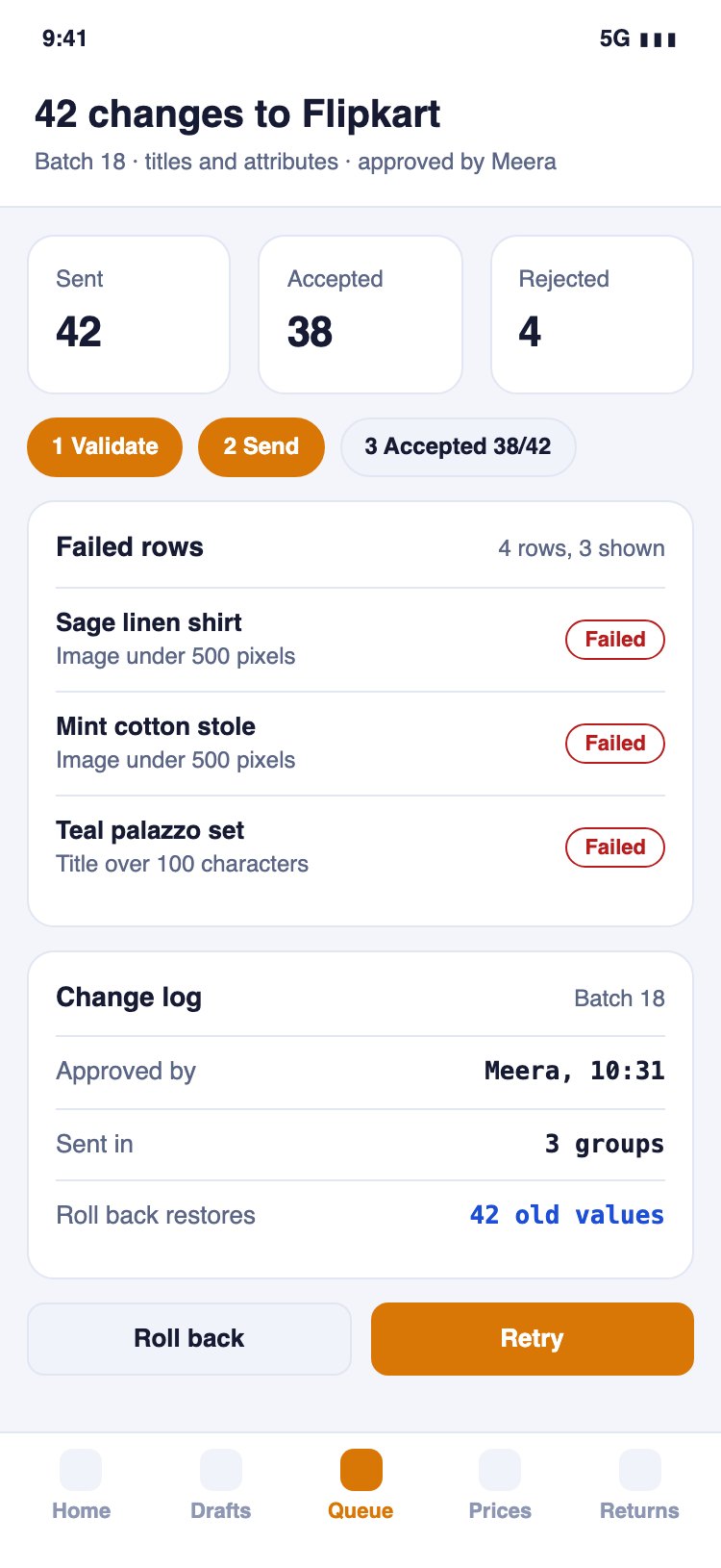
- Group approved changes into batches, validate them against marketplace rules, send them by API or export file and track each row until it is accepted or rejected.
- Express pricing as rules with a margin floor, a target and rounding, and show fees, shipping, cost and margin before and after each change.
- Cap how many prices change per day, hold large moves for approval and keep a log from which any change can be rolled back.
- Group return reasons by product, size and channel, flag unusual patterns for a person to review and turn a pattern into a catalog task.
The Engineered Solution
1One product record, many formats
The master record stays neutral. A mapping layer holds each marketplace's categories, required fields and limits as versioned data, builds the payload and validates it before anything is sent.
2Drafts that a person approves
The AI step reads photos and existing text and proposes values. Each one is shown beside the old value with a confidence label, and the step has no ability to publish.
3Prices that start from margin
A rule says what the seller must keep after fees, shipping and cost. The preview shows every affected price, and a daily cap and an approval step stop a bad rule from spreading.
4Returns turned into tasks
Reasons and buyer comments are sorted into themes and split by size and channel. A standout pattern becomes a task for the catalog team, such as a size-chart fix or a new photo.
Design Concept Screens
Design concepts with fictional demo data. They show how the product could look and work, not a live release.
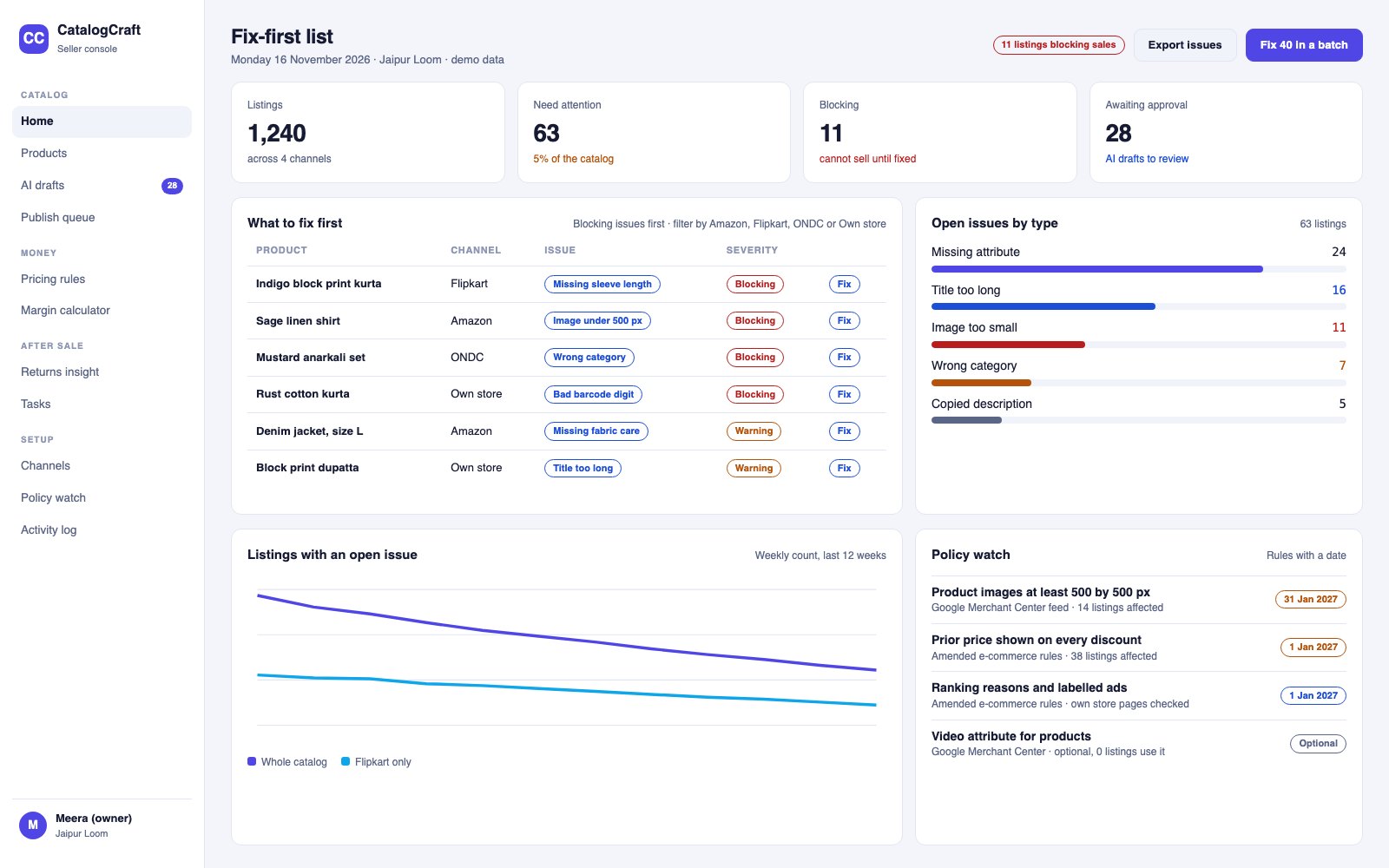
01 / 05 Fix-first list - see which listings block sales, then fix a whole batch in one go
Engineering Process
- Map how the seller's team lists, prices and handles returns today, using their own spreadsheets and each marketplace's seller dashboard.
- Model the data: products, variants, attributes per category, channel mappings, rules, tasks and an append-only change log.
- Prototype the fix-first list, the draft review and the price preview, and test them with a catalog executive and a pricing manager.
- Build the catalog core and the rule engine, then the first two channels, one by API and one by spreadsheet template.
- Add AI drafting behind the approval step, and test it on a fixed set of fictional products marked by reviewers before any prompt or model change.
- Build the publish queue with per-marketplace rate limits, then pricing rules, the margin calculator and the daily cap.
- Add returns insight and the policy watch, test rate limits and rollback on a test seller account, then run a pilot on a fictional catalog.
Production Tech Stack
| Layer / Component | Production Technologies |
|---|---|
| Web app | Next.jsTypeScriptTailwind CSSshadcn/uiTanStack Table with virtualised rowsRecharts |
| API | Node.js with NestJSZod input validation |
| AI service | Python with FastAPIa vision-language model and a large language model behind a schema checkwith no tools and no publish rights |
| Jobs | BullMQ on Redis for batch validationpublishing and retrieswith a queue and concurrency limit per marketplace |
| Data | PostgreSQL with JSONB attributes checked by JSON Schema per categoryrow-level security per workspacepgvector for duplicate detection |
| Hosting and tools | AWS Mumbai region with S3 image storageTerraformGitHub Actionssecrets kept in AWS Secrets Manager |
What the design aims for
CatalogCraft aims to untangle multi-marketplace selling by checking every listing against written channel rules, drafting fixes for a person to approve, and tying each price and return to the margin it affects.